- For
- Classes or clubs new to entrepreneurship
- Problem
- You want students to get a short, hands-on taste of entrepreneurship
- Main outputs
- Problem cards, idea board, short presentation
- Helpful to share
- Grade and group size, available time, venue
Home / Startup & Entrepreneurship Programs / Youth Entrepreneurship Education
Startup & Entrepreneurship · Program
Youth Entrepreneurship Education
Learn to spot a problem, test an idea, and build something that responds to real needs.
Teamwork, prototyping, presenting, and reflection, designed around each school’s or organization’s learning goals.
Contents
Who It’s For
- Middle and high schools adding entrepreneurship or career education to classes, clubs, or career activities
- Youth organizations running holiday camps or multi-session programs
- Education offices, local governments, and foundations planning entrepreneurship programs for young people
Learning Path
- Find a problem
- Understand customers
- Shape the idea
- Build a prototype
- Get feedback, improve
- Present and reflect
Investment and sales are not used as measures of success. We record and assess problem definition, customer understanding, testing, teamwork, and iteration.
Three Formats
- For
- Middle and high schools adding it to classes, clubs, or career activities
- Problem
- It isn’t clear what to do or assess in each session
- Main outputs
- Session plan, team prototypes, activity portfolio, assessment records
- Helpful to share
- Format (class or club), number and length of sessions, number of students, assessment approach
- For
- Youth organizations, education offices, and foundations running holiday programs
- Problem
- You need a short program in which teams finish a project and present it
- Main outputs
- Prototypes, slides, demo day, reflection records
- Helpful to share
- Dates and venue, number of students, preferred mentors, parental consent process
Number of sessions and length are examples and are set with each school or organization.
Sample Layout
Session activities and assessment criteria
- The problem
- You want entrepreneurship education but aren’t sure what to do or assess in each session
- What TeamWe makes
- Session activities, student outputs, and process-based assessment criteria
- How it’s used
- Teachers copy the session plan into their class or club plan and use the criteria to record student progress
Sample screen · fictional data
| Session | Activity | Student output |
|---|---|---|
| 1 | Spot problems around you | List of 10 problems |
| 2 | Choose a problem | Problem statement |
| 3 | Customer interviews | 3 interview notes |
| 4 | Solution ideas | Idea comparison |
| 5 | Build a prototype | Paper or digital prototype |
| 6 | Get feedback | Revision notes |
| 7 | Prepare the presentation | Slides |
| 8 | Present and reflect | Presentation, reflection journal |
Assessment — we look at the process, not sales or awards
| Criterion | Beginning | Developing | Achieving |
|---|---|---|---|
| Problem definition | Lists complaints | Names who and when | Explains the problem with evidence |
| Customer understanding | Relies on own opinion | Asks people nearby | Confirms through interviews and records them |
| Testing | Trusts the idea as is | Collects reactions | Sets criteria and judges what held up |
| Teamwork | Roles unclear | Divides roles | Improves each other’s work |
| Iteration | Keeps the first version | Listens to feedback | Explains what changed after feedback |
Fitting Your School or Organization
- Level of difficultyStudents new to entrepreneurship start with everyday problems and paper or simple digital tools; experienced students move on to real user interviews and digital prototypes
- Classes, clubs, and career activitiesSessions are divided to match how you run things: a project within a course, a year-long club, or a career week
For Program Coordinators
What the proposal covers
- Session activities and materials
- Roles of the school or organization and TeamWe
- Activities that need parental consent
- Photography and how personal information is handled
- On-site safety plan
How we work
- Student personal information is handled only within the scope agreed with the school or organization
- Interviews and off-site activities require supervision by the organization and parental consent
- Students and the organization decide how widely their work is shared
This website does not take registrations or payments and does not collect personal information from young people.
The CEO’s Book
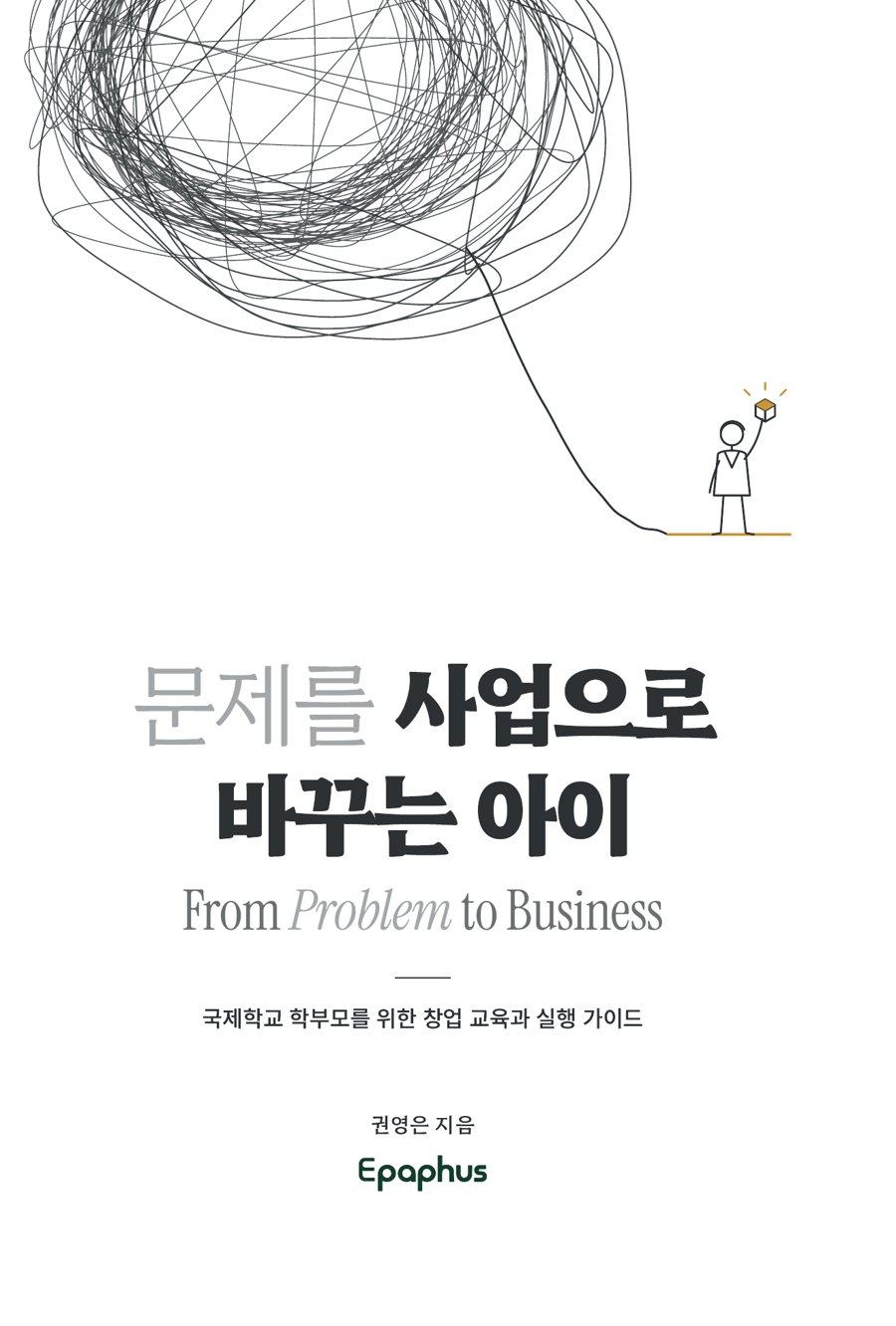
By Eunice Kwon · Korean-language book · scheduled for November 2026
문제를 사업으로 바꾸는 아이
A guide for international school parents on entrepreneurship education
The book walks parents through how a child turns an everyday frustration into a defined problem, tests a hypothesis, and meets a first customer. It covers learning entrepreneurship at school, student companies and competitions, careers and university admissions, and what parents need to take care of — consent, taxes, and personal information.
The book is published in Korean. The English subtitle on the cover belongs to the Korean edition; no English edition has been announced. The cover and contents may change before publication.
Related Experience
Judging, mentoring, and lectures for university students and young adults. These are not youth programs run by TeamWe; they inform how we design programs for younger learners.
What Shapes Scope, Timeline, and Fees
- Number of students and teams
- Format and number of sessions
- Venue and materials
- Mentors and judges
- Whether a workbook is produced
- Size of the final showcase
Discuss Youth Entrepreneurship Education
Tell us the grade, group size, and timing, and we’ll suggest a format and number of sessions.